
History of Taverns And Pubs in Český Krumlov
 Before our modern age,
ale houses, pubs and inns did not really differ from similar
facilities in any small town or village. In comparison to the
number of houses, the density of pubs was quite the same
(officially, every eight house out of 330 was a pub as well), the
drink selection contained mainly beer and, since it was its own
product and therefore made a profit, its consumption was supported
even by the gentry; furthermore there was wine, spirits (since it
was not that profitable for the inn-keepers, its consumption was
always criticized). The forms of current communication were
similarly bordered, as today, by the amount of consumed alcohol,
the type of society and vision of profit to be supposedly gained by
the owner of such a social facility.
Before our modern age,
ale houses, pubs and inns did not really differ from similar
facilities in any small town or village. In comparison to the
number of houses, the density of pubs was quite the same
(officially, every eight house out of 330 was a pub as well), the
drink selection contained mainly beer and, since it was its own
product and therefore made a profit, its consumption was supported
even by the gentry; furthermore there was wine, spirits (since it
was not that profitable for the inn-keepers, its consumption was
always criticized). The forms of current communication were
similarly bordered, as today, by the amount of consumed alcohol,
the type of society and vision of profit to be supposedly gained by
the owner of such a social facility.
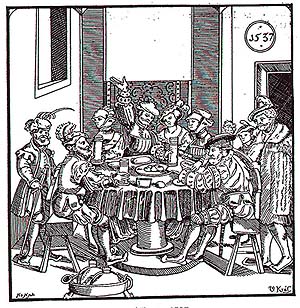
As per the village pubs, the same applied to those in Krumlov during the Middle Ages and first century of the new age (until 17th century). Opening hours were not set, as drinking usually started right after work and, if we may, "drinking" itself, which made the main sense to go to a pub, belonged in a way to the daily working cycle. The number of rules and orders, whose effect could be quite dubious even today (it concerned money, though) banned alcohol consumption on Sundays and all other holidays. In the 16th century, the formal closing hour in pubs was 9 p.m., and, exceptionally, an hour before midnight. However, many disputes negotiated in pubs give us evidence of drinking until the very morning, and some individuals even managed to hold out for a couple of days.
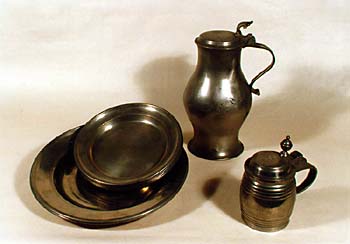
Drinking as such was not prohibited, neither to men or women, however it always depended on the individual limit of the consumer, so as not to bring a socially negative status upon one's self. An old Czech Dictionary provides us with number of adjectives describing such limits (as well as in German, which was also used in Český Krumlov), i.e. "roughly drunk", "idly soaking", "immoderate drinking", "morning intoxication", "brutal drunkenness" etc. We can get an idea in what condition the guest was by means of the inn-keeper's description: " ...so inappropriately was he pouring wine into his throat, such that his nature could not have born, that he eventually fell off and stayed wallowing on the bench".
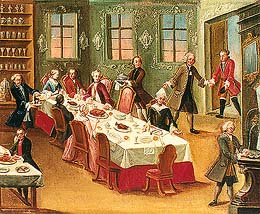 Wedding was, as it is
today, the best medicine recommended against "immoderate drinking".
Except for those dedicated, contemporaries would hardly comprehend
the amount of drink consumed, even though alcohol itself was not
concerned only - having enough to eat and drink well was a symbol
of the welfare of those days.
Wedding was, as it is
today, the best medicine recommended against "immoderate drinking".
Except for those dedicated, contemporaries would hardly comprehend
the amount of drink consumed, even though alcohol itself was not
concerned only - having enough to eat and drink well was a symbol
of the welfare of those days.
During the 1560's, the daily portion of female Castle
associates, hardly exceeding 10 women, reached 8 liters of red
wine, even though some courtiers did not make it with three half
liters per day. In comparison to town, the Castle environment in
Krumlov was not after all exceptional; 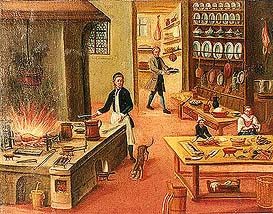 the inn-keepers in town
were able to report (meaning thoroughly minimized) 19.000 liters of
wine consumed during a half-year in 1596-1597, which meant that
minimum the daily consumption returned reached approximately 100
liters of wine every day. Moreover, there were about 330 houses in
Krumlov in those days.
the inn-keepers in town
were able to report (meaning thoroughly minimized) 19.000 liters of
wine consumed during a half-year in 1596-1597, which meant that
minimum the daily consumption returned reached approximately 100
liters of wine every day. Moreover, there were about 330 houses in
Krumlov in those days.
"Big politics" or Turkish invasions were not the hottest theme in pubs at all but unfaithful women, money, debts, local power, good origin and the "usefulness" of man for local community life. Gambling was another unavoidable part of pub life including "classical" cards, dice, and the necessary army of betting spectators. Music and parody performances were not exceptional either.
So-called roadside inns were the only peculiarity of inns in the Middle Ages and beginning of the new age. More detailed information only appeared in the middle of the 16th century.
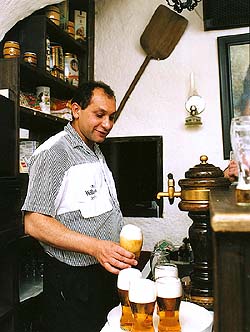 Since the Rosenbergs
usually accommodated their guests there, the atmosphere differed a
little for being a "prolonged arm" of the aristocratic court. The
owner of such a facility was a very important person at court and
could have been involved in many Castle issues and decision-making
processes. This is evidenced by the case of three Castle
inn-keepers Jan Ledenický, (known as Podlaha, cz. Floor, according
to his inn's tradition at (Náměstí
Svornosti No. 7), his competitor Adam Mazouch, and Ledenický's
descendant Cyriak Lämpl who lived in the middle of 16th century.
This instance shows that there were not only great opportunities
waiting for court inn-keepers but a number of traps, too. For
example, when Jan Ledenický was discovered as having defrauded more
than the others, he was not executed as was the common practice for
falsification of those days, because his death would have been too
tempting for his competitors to gain his power and position.
Since the Rosenbergs
usually accommodated their guests there, the atmosphere differed a
little for being a "prolonged arm" of the aristocratic court. The
owner of such a facility was a very important person at court and
could have been involved in many Castle issues and decision-making
processes. This is evidenced by the case of three Castle
inn-keepers Jan Ledenický, (known as Podlaha, cz. Floor, according
to his inn's tradition at (Náměstí
Svornosti No. 7), his competitor Adam Mazouch, and Ledenický's
descendant Cyriak Lämpl who lived in the middle of 16th century.
This instance shows that there were not only great opportunities
waiting for court inn-keepers but a number of traps, too. For
example, when Jan Ledenický was discovered as having defrauded more
than the others, he was not executed as was the common practice for
falsification of those days, because his death would have been too
tempting for his competitors to gain his power and position.
Further information:
History
of Guilds and Crafts in Český Krumlov
History
of Taverns and Pubs in the Český Krumlov Region
History
of Brewing in Český Krumlov
(as)